


Ubrique's know-how
Ubrique is internationally recognized as the cradle of Spanish leather goods.
For more than two centuries, generations of artisans have perfected unique knowledge in leather work, collaborating with some of the most prestigious luxury brands in the world.
It is here that we make each Merelu bag, in a specialized workshop where experience, precision, and attention to detail remain essential.

Materials selected for durability
We work with leathers selected for their quality, durability, and natural beauty.
Each material is chosen for its ability to age gracefully, develop character with use, and stand the test of time without losing its essence.
A handmade process
Each MERELU bag goes through numerous manufacturing stages, from cutting the leather and assembling the different parts to edge dyeing, hardware assembly, and final finishes.
Many of these operations are still performed manually because no machine can do them better. The edge, that dyed and polished border that almost no one notices, is applied by hand: layer after layer, waiting for each to dry in between. It is the first thing that reveals a poorly made piece.
Before leaving the workshop, each piece is individually inspected. Not by batches or by sampling: one by one.
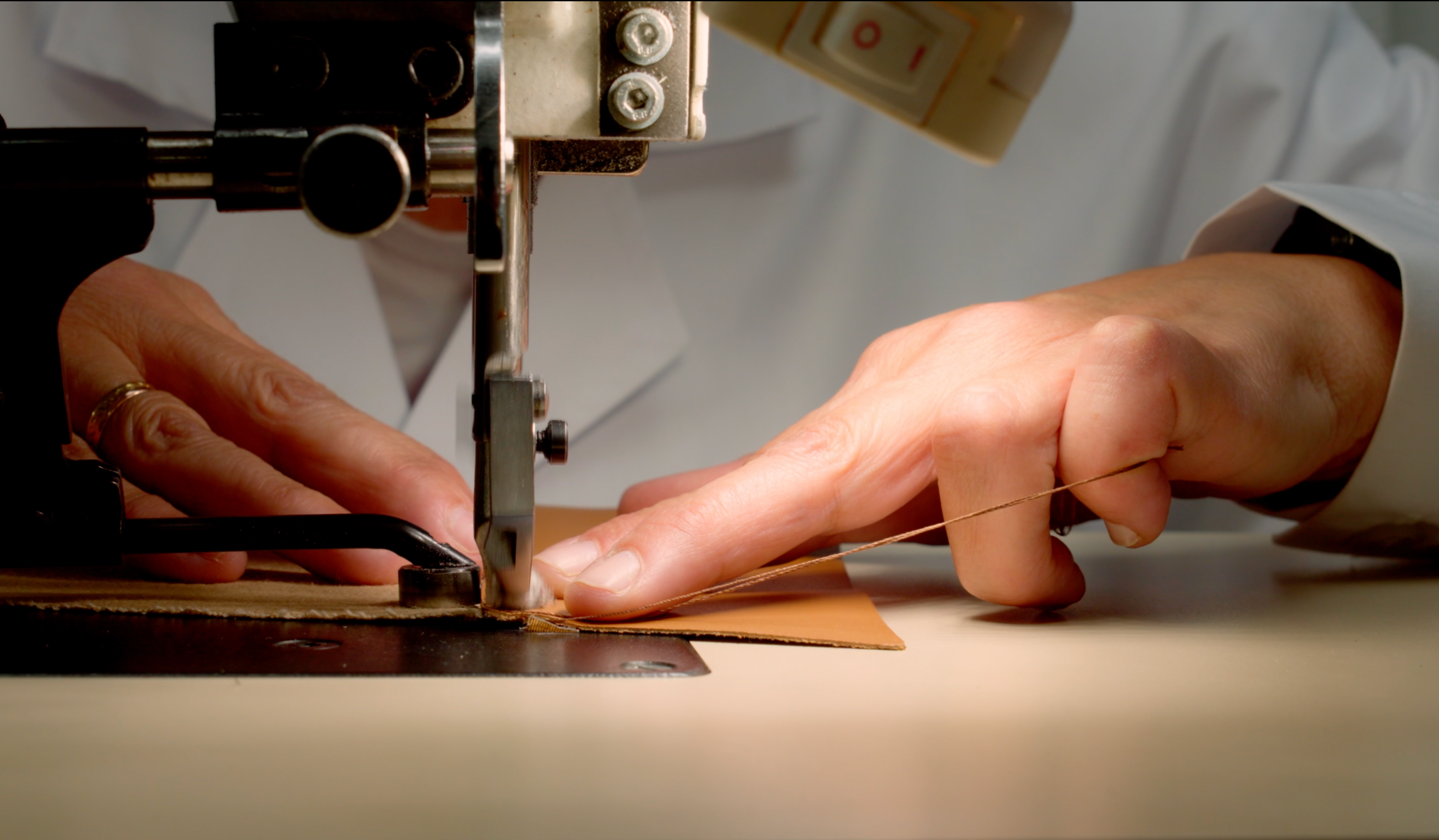
Sewing
Taut thread and even stitching. In a well-made piece, the stitches are uniform from start to finish, even where they are not visible.
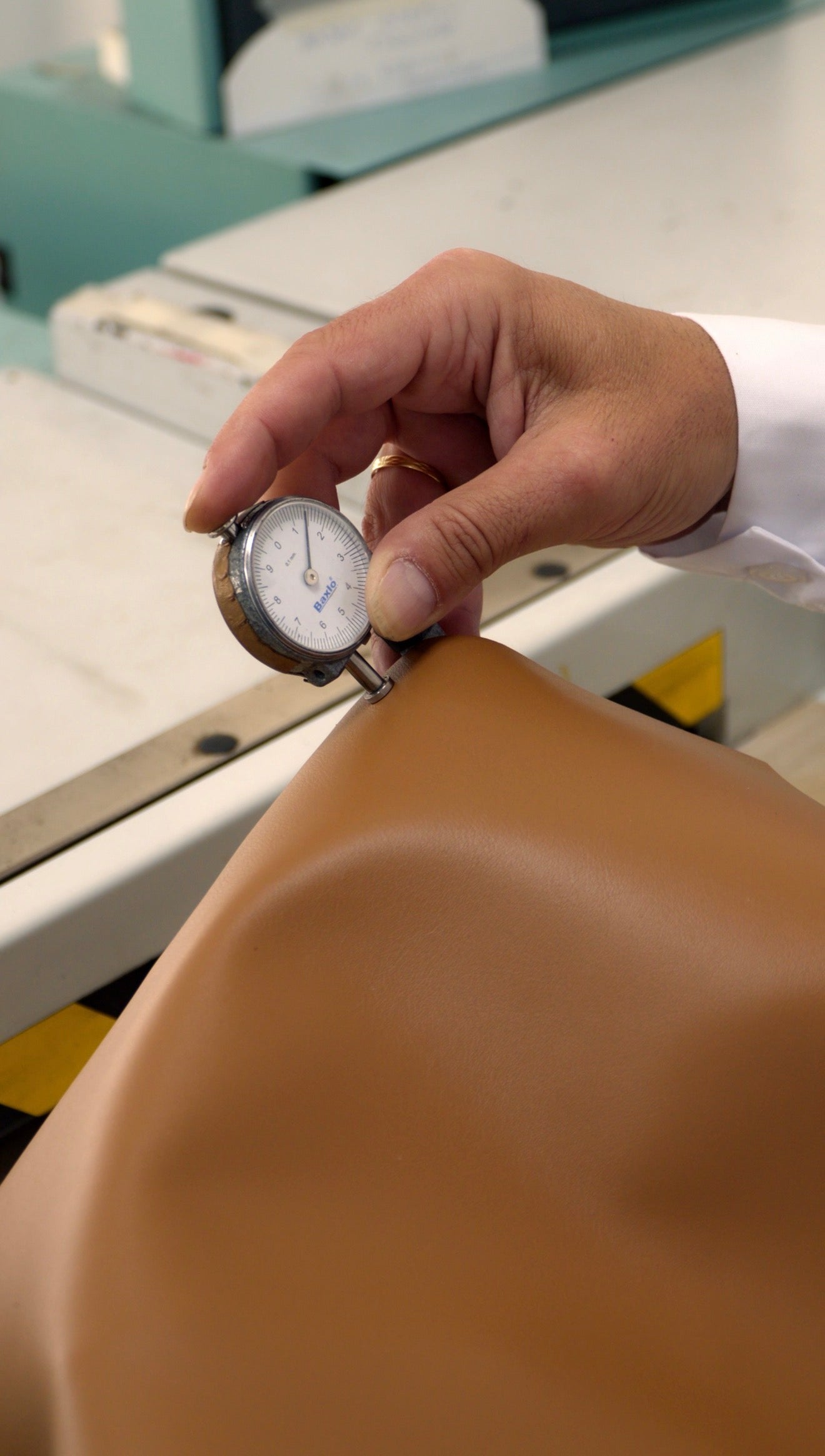
Thickness
Each leather is measured before cutting. A few tenths too much and the piece loses its drape; a few tenths too little and it won't hold its shape.
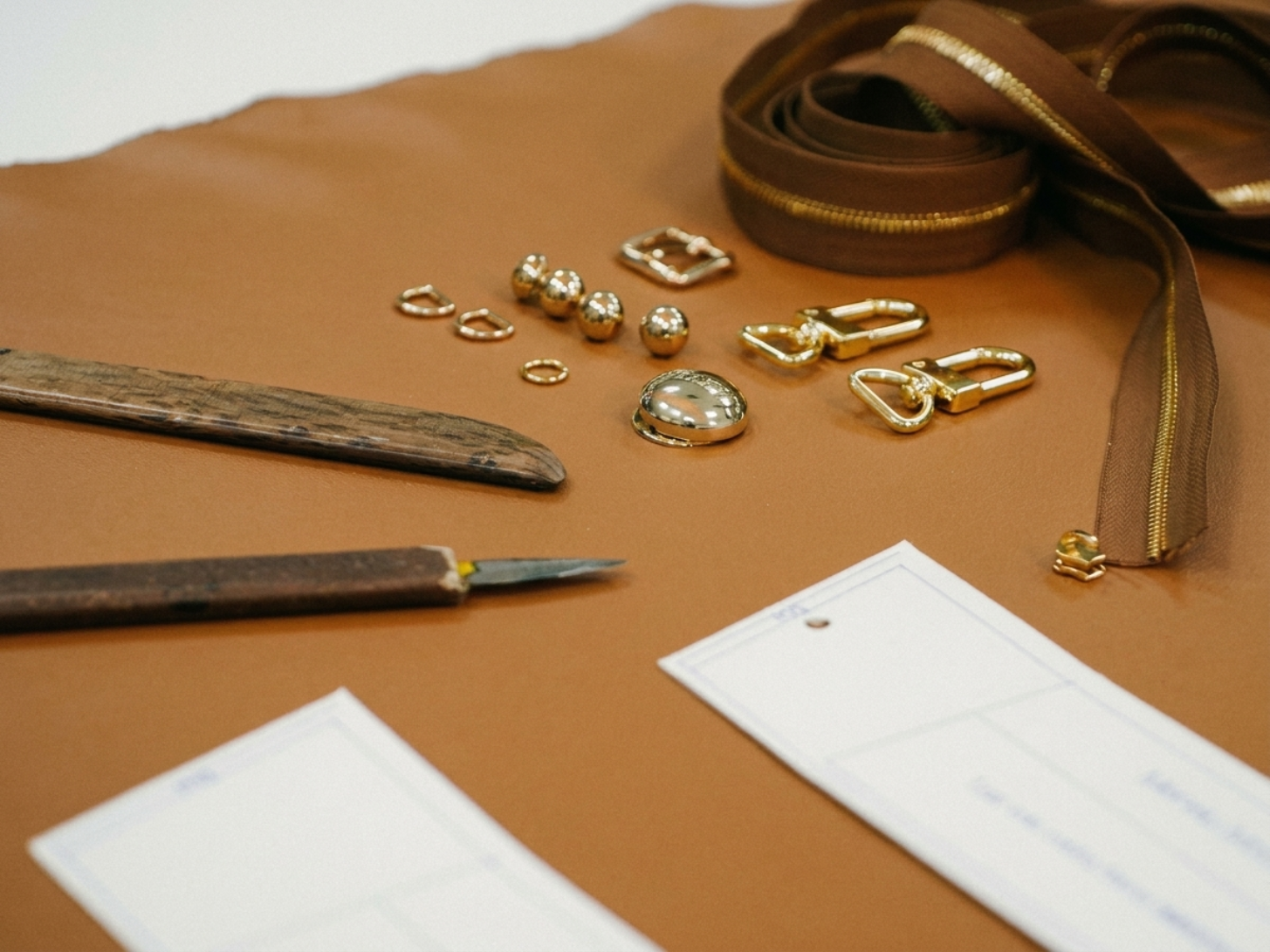
The hardware
Buckles, carabiners, and the spherical clasp with the engraved logo. They are assembled one by one, at the end, when the piece is already sewn.
How can you tell if a piece is well made
You don't need to be an expert. There are four things that are immediately obvious and separate a handcrafted item from an industrially produced one.
The edge. Run your finger along the edge of the leather. If it's smooth and sealed, it has been dyed and polished by hand. If it's rough or separates into layers, it has simply been cut and little else.
The stitching. Look at the stitches where the piece turns. If they maintain the same size and inclination on curves, they were made with skill.
The weight of the hardware. Good hardware has a certain weight, and the clasp closes crisply, without looseness. This is the first thing to fail in a poorly made item.
The feel of the leather. Real tanned leather warms up in your hand and changes with use. Plasticized finishes always stay the same.
Engineered to last
Leather is not chosen by how it looks on the first day, but by how it will look in ten years.
Well-chosen leather darkens slowly, gains shine where the hand touches it, and eventually takes on a form that is uniquely yours. What would be wear and tear in another product, here is the piece becoming yours.
That's why we don't work by seasons. We make few pieces, and we make them to last longer than the fashion around them.
